


 Deutsch
 English
 Español
 Français
 Nederlands
 Português


 Share
Share




What Are the 2026 Semiconductor Tariffs?
The 2026 semiconductor tariff landscape represents a fundamental shift in global technology trade policy, creating a two-tier market where advanced AI chips face 25% national security tariffs while other components flow through different trade channels. This policy framework, established through Section 232 investigations and presidential proclamations in January 2026, specifically targets high-performance computing chips like NVIDIA H200 and AMD MI325X models used in artificial intelligence applications. The tariffs aim to protect America's economic and national security interests by incentivizing domestic semiconductor manufacturing and reducing foreign dependency in critical technology sectors. According to the Commerce Department investigation that preceded the tariffs, the United States manufactures only about 10% of the chips it consumes, creating dangerous supply chain vulnerabilities that threaten both military capabilities and economic competitiveness.
The Supreme Court Rulings and Legal Framework
Recent Supreme Court decisions have dramatically reshaped the tariff landscape, creating immediate supply chain disruptions that will define global semiconductor manufacturing patterns through 2026 and beyond. In February 2026, the Supreme Court invalidated IEEPA-based reciprocal tariffs, eliminating higher country-specific rates that had previously complicated global trade. However, Section 232 national security tariffs on advanced AI chips remain firmly in place at 25%, creating a targeted approach to semiconductor trade policy. This legal distinction has created what experts call a 'strategic redundancy' approach to supply chains, where companies must navigate complex stacking rules that can see Chinese steel facing up to 85% combined rates while semiconductor imports follow different pathways. The Section 232 investigation process has become a critical tool in the geopolitical competition for technological supremacy.
Manufacturing Reshoring to the United States
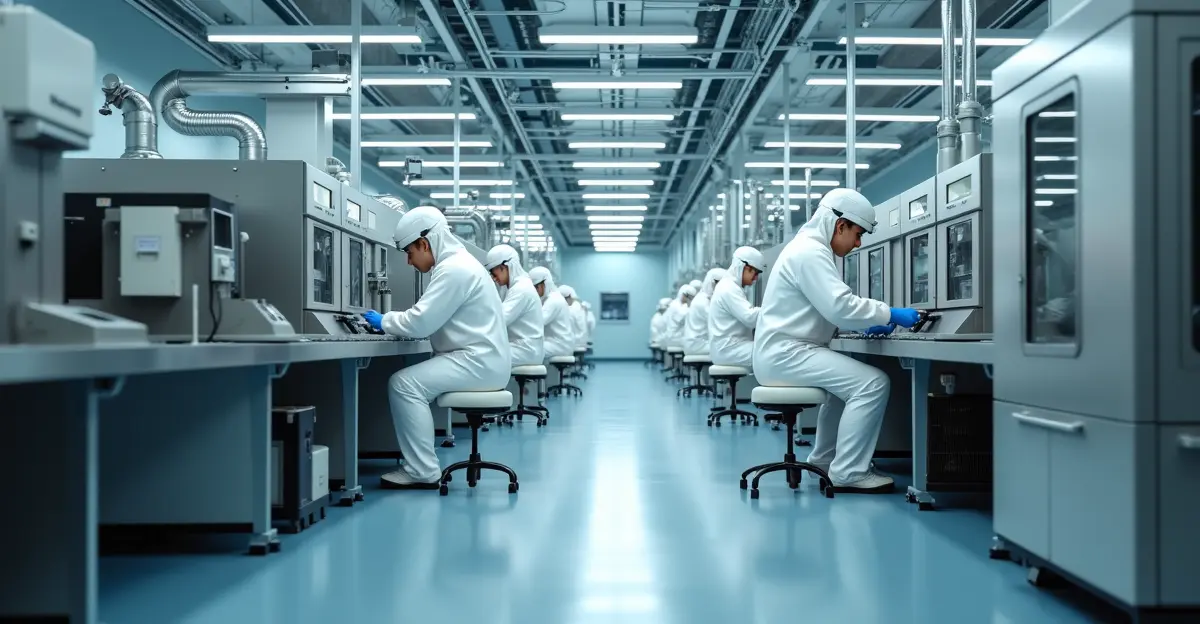
The 25% tariffs on advanced AI chips are accelerating manufacturing reshoring to the United States at an unprecedented pace. Taiwan Semiconductor Manufacturing Company (TSMC) is making a historic $165 billion investment in Arizona, representing the largest foreign direct investment in US history. This 'GigaFab cluster' near Phoenix includes plans for up to 12 fabrication plants and 4 advanced packaging facilities, with the first fab already operational producing chips for Apple and NVIDIA. As of March 2026, TSMC's capital expenditure budget of $52-56 billion represents a 27-40% increase over 2025, with most allocated to advanced process technologies. 'This massive investment aims to reshape the global semiconductor supply chain and create an AI chip supply chain on American soil,' according to industry analysts. The Arizona facilities are expected to create 6,000 direct jobs and strengthen America's leadership in critical technologies like AI and high-performance computing.
Consumer Electronics Shift to India and Southeast Asia
While advanced AI chip production moves to the United States, consumer electronics manufacturing is rapidly shifting to India and Southeast Asia. Apple has already moved 18-20% of its global iPhone production to India, with further expansion planned throughout 2026. India has emerged as the preferred destination for semiconductor and IoT Global Capability Centers (GCCs) over Southeast Asian countries due to several key advantages. The country boasts a massive talent pool with over 2 million STEM graduates annually and contributes 20% of the global chip design workforce. Major tech companies like AMD, Qualcomm, Intel, and Texas Instruments have established significant design operations in India. According to industry projections, India's semiconductor market is expected to grow from $45 billion in 2025 to $100 billion by 2030, driven by geopolitical shifts and the China-plus-one diversification strategy. This geographic supply chain fragmentation represents a strategic realignment that balances national security concerns with economic competitiveness.
Economic Impact and Supply Chain Costs
The economic consequences of the 2026 tariff landscape are significant and far-reaching. The Tax Foundation estimates that tariffs have added $1,000-$1,300 in costs per American household, creating financial pressure across the technology sector. One year after President Trump's 'Liberation Day' tariffs in April 2025, the tech industry has faced significant disruption with 89,000 jobs lost, though new manufacturing jobs are being created through reshoring initiatives. The two-tier market structure means that AI chips destined for re-export to China face the full 25% tariff, while those used in U.S. data centers receive exemptions. This creates complex compliance requirements and supply chain management challenges for multinational corporations. The global technology race has entered a new phase where trade policy directly shapes manufacturing geography and technological leadership.
Geopolitical Implications and Future Outlook
The semiconductor tariff landscape represents more than just trade policy—it's a fundamental component of geopolitical competition in the 21st century. The strategic importance of semiconductors for defense systems, critical infrastructure, and artificial intelligence has elevated chip manufacturing to a national security priority. The U.S.-India cooperation in creating strategic redundancy in semiconductor supply chains aims to diversify manufacturing away from concentrated production hubs, particularly in East Asia. This collaboration addresses vulnerabilities exposed by recent supply chain disruptions and geopolitical tensions, seeking to build more resilient and geographically distributed chip production networks. As the CHIPS and Science Act continues to provide funding for domestic semiconductor manufacturing, the global technology landscape is undergoing a structural transformation that will define economic and security relationships for decades to come.
Frequently Asked Questions
What specific chips are subject to the 25% tariff?
The 25% Section 232 tariff specifically targets advanced computing chips used in artificial intelligence applications, including NVIDIA H200 and AMD MI325X models. These high-performance semiconductors are critical for AI training and inference workloads.
How do the tariffs affect consumer electronics prices?
While advanced AI chips face tariffs, most consumer electronics components are exempt or face lower rates. However, the Tax Foundation estimates overall tariff costs add $1,000-$1,300 per American household annually through indirect effects on supply chains and manufacturing costs.
What is the timeline for TSMC's Arizona expansion?
TSMC's $165 billion Arizona investment includes multiple phases: the first fab became operational in 2025, the second fab completes equipment installation in Q3 2026, and construction has begun on the third fab. The full 'GigaFab cluster' of up to 12 fabs will develop through 2030.
How does India compare to Southeast Asia for semiconductor manufacturing?
India leads in chip design talent with 20% of the global workforce, while Southeast Asian countries like Vietnam and Malaysia focus more on manufacturing and packaging. India's massive STEM graduate pool and established design ecosystem give it advantages in high-value semiconductor work.
What happens when Section 122 tariffs expire in July 2026?
The 10% global Section 122 tariff expires on July 24, 2026, but Section 232 national security tariffs on semiconductors (25%), steel (50%), and autos (25%) will remain in place, continuing to shape trade patterns and manufacturing decisions.

Follow Discussion